Health
Lateral Step Ups: Complete Guide to Technique, Benefits, Muscles Worked, and Variations in 2026

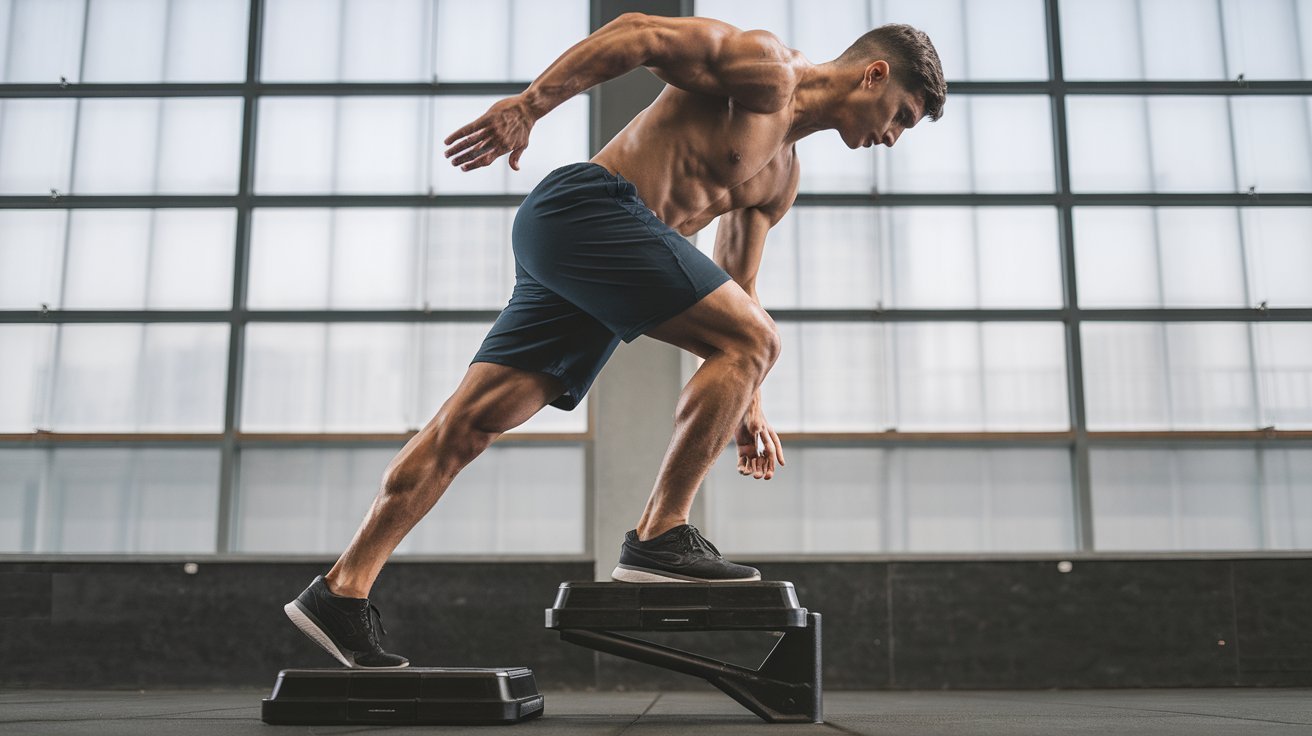
Lateral step ups are a simple but highly effective lower-body exercise that challenges the legs, hips, and core while introducing movement in the frontal plane. Unlike a traditional step-up performed directly in front of the body, the lateral version requires us to step sideways onto an elevated platform. This small change can significantly alter the muscles involved and the coordination required to maintain balance.
The exercise can be performed with a sturdy step, plyometric box, aerobic platform, or other stable elevated surface. Because the height and resistance can be adjusted, lateral step ups are suitable for beginners as well as experienced athletes. They can be used for strength training, balance development, unilateral leg training, athletic conditioning, and functional movement.
When performed with controlled technique, lateral step ups can strengthen the glutes and quadriceps while challenging the muscles responsible for stabilizing the hips and knees. They are particularly useful when we want to train one leg at a time while also introducing side-to-side movement.
What Are Lateral Step Ups?
A lateral step up is a unilateral lower-body exercise in which we stand beside an elevated platform, place one foot on top, and drive through that leg to raise the body onto the platform. We then control the descent and return to the starting position.
The defining feature is the sideways starting position. In a conventional step-up, we face the box or step. In a lateral step-up, we stand perpendicular to it.
This positioning changes the movement demands. The working leg must produce force while the hips and core help stabilize the body against side-to-side movement. Depending on the platform height, stance, tempo, and added resistance, the exercise can emphasize different aspects of lower-body strength and stability.
Because we work one leg at a time, lateral step ups can also expose differences in strength, balance, mobility, and coordination between the two sides.
How to Perform Lateral Step Ups Correctly
We begin by placing a stable step or platform beside us. The height should initially be low enough that we can perform the movement without losing balance or compensating with the torso.
Stand next to the platform with the feet approximately hip-width apart. Place the foot closest to the platform firmly on top of the surface. The entire foot should be supported rather than having the heel hanging off the edge.
From this position, bend the working knee slightly and drive through the foot to raise the body upward. We should focus on using the working leg rather than pushing aggressively from the trailing foot.
As we reach the top, bring the other foot onto the platform or allow it to meet the working foot according to the selected variation. Maintain control and avoid locking the knees aggressively.
We then lower the body back toward the floor under control. The same leg can continue working for the desired number of repetitions before switching sides.
Throughout the movement, keep the knee aligned generally with the direction of the toes. We should avoid allowing the knee to collapse inward, especially during the lowering phase.
Lateral Step Ups Muscles Worked
The primary muscles involved in lateral step ups are the quadriceps and gluteal muscles. The quadriceps extend the knee as we drive upward, while the glutes contribute to hip extension and stabilization.
The gluteus medius and other hip-abductor muscles are particularly important because the lateral position introduces a greater demand for side-to-side hip stability. These muscles help keep the pelvis controlled while the body moves onto and off the platform.
The hamstrings also contribute to hip extension and stabilization, while the calves help control the ankle and contribute during the upward movement.
The core muscles play an important supporting role. Because we are moving laterally and balancing on one leg, the abdominal and trunk muscles must help maintain a stable torso.
The exact muscle emphasis depends on platform height, technique, body position, and resistance. A higher platform generally demands greater range of motion, while a lower platform can make it easier to maintain precise control.
Benefits of Lateral Step Ups
One of the biggest advantages of lateral step ups is unilateral strength development. Because each leg performs the movement independently, we can identify and work on differences between our left and right sides.
The exercise also develops hip stability. Side-to-side movement requires the hip abductors to control the pelvis, making lateral step ups a useful addition to lower-body training programs.
Another benefit is improved balance and coordination. We must control our center of mass while stepping sideways and transitioning between the floor and elevated surface.
Lateral step ups can also provide valuable functional training. Everyday activities and many sports require us to move in multiple directions rather than exclusively forward and backward. Incorporating frontal-plane movements can therefore broaden our movement capabilities.
The exercise is also highly adaptable. We can change the difficulty by adjusting step height, repetitions, tempo, and external resistance. This makes it practical for home workouts, gym sessions, athletic programs, and general fitness routines.
Lateral Step Ups vs. Regular Step Ups
Although both exercises involve stepping onto an elevated surface, lateral step ups and traditional step ups are not identical.
A standard step-up is performed while facing the platform. The primary movement occurs in the forward direction, and the exercise emphasizes the muscles responsible for extending the hip and knee.
A lateral step-up begins with the body positioned beside the platform. The sideways orientation increases the coordination and stabilization requirements around the hip.
Neither variation is universally better. Instead, they serve slightly different purposes. Traditional step ups are excellent for developing unilateral leg strength in a forward movement pattern, while lateral step ups introduce frontal-plane training and greater lateral stability demands.
We can include both exercises in a well-rounded lower-body program rather than treating them as competitors.
Common Lateral Step Up Mistakes
One of the most common mistakes is selecting a platform that is too high. A high step can force excessive hip and knee flexion and may encourage compensatory movement. Beginners should start lower and increase the height gradually.
Another mistake is using the trailing leg to push excessively from the floor. This reduces the work performed by the leg on the platform. We should focus on driving through the elevated foot.
Allowing the knee to collapse inward is another technical issue. Maintaining appropriate knee alignment helps us control the movement and develop better lower-body mechanics.
We should also avoid dropping quickly during the descent. The lowering phase is an important part of the exercise and should be controlled rather than rushed.
Finally, excessive torso leaning can indicate that the platform is too high or that the chosen resistance is beyond our current ability.
Lateral Step Up Variations and Progressions
Once we can perform bodyweight lateral step ups confidently, we can increase the challenge in several ways.
The simplest progression is increasing the step height slightly. However, height should only be increased if we can maintain good alignment and control.
We can also hold dumbbells at our sides to add resistance. A weighted vest can provide another option while keeping the hands free.
For greater training control, we can introduce a slower eccentric phase. Taking several seconds to lower the body increases time under tension and encourages deliberate movement.
More advanced athletes can incorporate lateral step ups into conditioning sessions or use explosive variations when appropriate. However, explosive training should be introduced only after we have developed reliable technique and sufficient strength.
We can also perform alternating repetitions, single-leg holds at the top, or controlled pauses to emphasize balance and stability.
How to Program Lateral Step Ups
The appropriate programming depends on our goal. For general fitness and muscular endurance, moderate sets of approximately 8–15 repetitions per side can work well.
For strength development, we can use fewer repetitions and gradually increase resistance while maintaining excellent technique. Because the exercise is unilateral, we should generally complete comparable work on both sides.
Lateral step ups can be performed during a lower-body workout after major compound exercises or earlier in the session when balance and movement quality are priorities.
A useful approach is to begin with two or three sets using a manageable platform height. As technique becomes consistent, we can gradually increase resistance or volume.
We should always use a platform that is stable, level, and appropriate for the exercise. The surrounding area should also be clear so that a loss of balance does not create unnecessary hazards.
Final Thoughts on Lateral Step Ups
Lateral step ups are an accessible and versatile exercise for strengthening the legs while developing hip stability, balance, coordination, and unilateral control. Their sideways orientation makes them particularly valuable for adding frontal-plane movement to a conventional lower-body training routine.
The most important technical priorities are a stable platform, controlled foot placement, strong drive through the working leg, appropriate knee alignment, and a deliberate descent. We should begin with bodyweight and a manageable step height before adding resistance or increasing the platform.
Whether our objective is general fitness, strength development, athletic preparation, or improved movement quality, lateral step ups can occupy a useful place in a balanced training program. By progressing gradually and emphasizing quality over quantity, we can use this relatively simple exercise to build stronger, more stable, and better-coordinated lower-body movement throughout 2026.



 Business3 months ago
What Interests You Most About Opportunities at Coke Florida
- Lifestyle3 months ago
Selena Spice: Biography, Career, Age, Height, Social Media, and Rising Popularity
- Celebrity3 months ago
Michelle Schumacher: Biography, Career, Family, Movies, and Creative Journey
- Blog3 months ago
Truck Accident in Houston: Causes, Legal Options, Safety Tips, and Everything You Need to Know
- Tech3 months ago
Microsoft Ink: The Complete 2026 Guide to Digital Pen Technology, AI Productivity, and Creative Workflows
- Celebrity3 months ago
Manuel Mendes: Biography, Career, Achievements, Legacy, and Lasting Influence
- Celebrity3 months ago
Helen Kardashian: Everything We Know About the Name, Background, and Public Interest
- Celebrity3 months ago
Kendra Sunde: Biography, Career, Leadership, Achievements, and Lasting Impact